Statements

Reform Movement Joint Statement: Israel’s Election and a Moment for Moral Courage

October 28, 2026

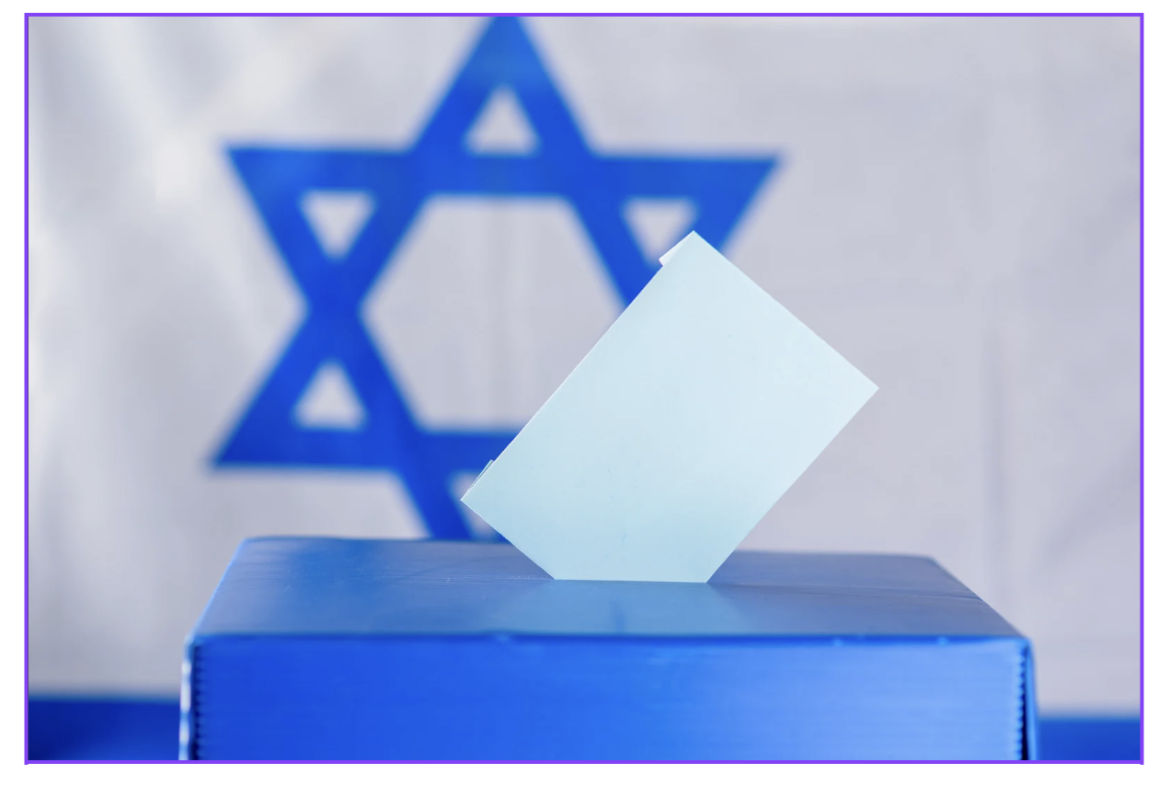
Israelis went to the polls on Tuesday, October 27, 2026 in record numbers, with turnout reaching 77.7 percent, the highest since 1999. Now comes the hard part: making sense of what the electorate has decided. 

Many Israeli and Diaspora Jews hoped for a clear repudiation of the politics and priorities of the past four years. While the current government did not receive the support of the majority of Israelis, there are still votes to be counted and coalitions to be formed, and an alternative government seems difficult to establish. As of this writing, both major blocs are assessing their pathways to leadership, and analysts expect coalition negotiations to take weeks, perhaps months, with another round of elections as a real possibility. 

As the various political parties try to mediate the competing claims of this defining moment, the Babylonian Talmud offers guidance to those working through a complex but critical communal dispute. 

Rabbi Yehoshua ben Korḥa says: It is a mitzvah to mediate a dispute, as it is stated: “Execute the judgment of truth and peace in your gates” (Zechariah 8:16). Is it not that in the place where there is strict judgment there is no true peace, and in a place where there is true peace, there is no strict judgment? Rather, which is the judgment that has peace within it? You must say: This is mediation, as both sides are satisfied with the result…” Sanhedrin 6b:6-7

How Israel’s parties form a coalition is for Israelis to decide. Our love and commitment to Am Yisrael and Medinat Yisrael will outlast any election. If the outcome deepens our concerns, we will not step back, because Israel needs more from us now, not less.  

If you feel disappointed, you are not alone. It does not make you any less committed to Israel, but reflects how much you care. North American Jews carry real anxiety and real attachment at the same time. We are holding the pain of October 7th, the ensuing war, and rising antisemitism here at home. Many of us have also spent years watching an Israeli government pursue policies that do not align with either our vision for the Jewish state or Israel’s own founding principles. 

And yet, this election was a powerful statement about the vibrancy and diversity of Israel’s democracy. Millions of citizens, including a record number of Palestinian citizens of Israel, fulfilled their civic duty and made their voices heard at the ballot box. That participation must be celebrated rather than demonized. Parties outside the current governing coalition, which has presided over increasingly polarizing and extremist policies, won a majority of the seats. Israeli citizens even flew home from North America to take part, and we are proud of them. A democracy is only as strong as its citizens’ ability to participate in it, and Israelis showed how seriously they take that responsibility. Whatever coalition emerges, that robust turnout belongs to the story, and so do we. 

This is also not only a foreign news story. Israel and the Diaspora are co-creators of the global Jewish community, and our fates are interconnected. What happens in Israel, whether on issues of religious expression and pluralism, the economy, or the military, lands in our home communities. It shapes how millions of Jews experience Judaism and how the next generation relates to Israel. Leading up to this election, Israeli Reform congregations experienced attacks at the hands of other Jews, our Reform rabbis still cannot perform a legally recognized marriage in the Jewish state, and the creation of an egalitarian section at the Kotel was agreed to by the Prime Minister and then shelved. These are not minor religious disputes; they speak to the same issues of democracy and equality that so many Israelis turned out to defend. 

The coming weeks and months may force political leaders to join in coalition with people and parties they promised not to. Nobody knows what this will look like, but in moments like this, alliances shift and old assumptions break down. It takes moral courage, agility, and creativity to meet them. We will continue to pay close attention to what any emerging government commits to, advocating for religious pluralism, equality, and democracy. 

For years, people on the ground in Israel have been organizing toward a political reality that embraces these values, including our sister movement, the Israel Movement for Reform and Progressive Judaism, and its advocacy arm, the Israel Religious Action Center. We are proud to partner with and learn from them.  

As North American Jews, we are not just watching from the sidelines. More than 2,000 Jews from around the world have signed the Reform Movement’s letter calling for a strong, shared Israel-diaspora relationship, and if you haven’t added your name, you can still do so. In addition, our World Zionist Congress bloc has moved significant funding from the Settlement enterprise and toward pluralistic institutions. And through our camps and youth programs, tens of thousands of North American young people build direct relationships with Israelis who share our values. This past summer, we welcomed a record number of Israeli staff to our summer camps, who bring with them a deep commitment and passion for Jewish Peoplehood and Zionism. 

This moment isn’t only for leaders and negotiators. As coalition talks unfold, it asks something of each of us, too. Start by learning about the people doing this work. Ask your congregation to bring IRAC and IMPJ into your community through a speaker, a study session, or a partnership.  

We want what we have always wanted: an Israel that is Jewish, democratic, and pluralistic, and a peaceful resolution that guarantees security, self-determination, and dignity for both the Israeli and Palestinian people. Our partners in Israel need us to help them further that vision. 

The coming weeks and months will test Israel’s leaders. They will test us, too, to stay engaged, committed, and hopeful. 

!עוד לא אבדה תקוותנו

Our hope is not lost!


Union for Reform Judaism 
Central Conference of American Rabbis 
American Conference of Cantors 
Conservative/ Masorti, Reform, Reconstructing Judaism Movements Condemn Detention of Those Assisting with the Olive Harvest In the West Bank

October 21, 2026

There shall be one law and one ordinance for you and for the stranger who resides with you.
(Numbers 15:16)

We are outraged that at least nine of our fellow Israeli and North American rabbis and dozens of others were detained while assisting a Palestinian family harvesting olives, and we call upon Israeli authorities to follow due process, immediately release all those detained, and protect Palestinians who peacefully work their land from harassment and violence. 

That farmers need to have others serve as a protective presence from violent settlers is itself a betrayal of Jewish values. Yet recent settler attacks on Palestinian harvesters and those working alongside them—and authorities’ failure or refusal to stop such attacks—have made that protective presence necessary.

Our global memberships span the political and ideological spectrum. Yet we are united in opposing all forms of terrorism across the region and in our conviction that detaining rabbis working for justice undermines Israel’s democratic values. 

We are in close contact with our members, and others on the scene, and are reviewing all the details as they emerge. As we gather information about this detention, we call on the Israeli government to release the detainees immediately, enable the productive harvesting of land, and turn its law enforcement efforts toward the violent settlers who have long been attacking Palestinian farmers and, more recently, journalists and diplomats. 

Rabbinical Assembly
United Synagogue of Conservative Judaism
MERCAZ USA 
Central Conference of American Rabbis
Union for Reform Judaism
Reconstructionist Rabbinic Association
Reconstructing Judaism

CCAR statements are grounded in the history of CCAR resolutions and platforms. We strive to represent the overall voice of the CCAR leadership and the Reform rabbinate on critical issues of the day. The CCAR is a diverse community of rabbis, and we recognize the multiplicity of viewpoints that exist within our membership. We encourage those of differing perspectives to engage in respectful dialogue. It is our hope that these statements provide the Reform community with deeper understanding of important issues that impact our lives as Jews and as global citizens.

Back to CCAR Statements

Central Conference of American Rabbis Statement on Attacks on Reform Jews in Israel

September 30, 2026

The Central Conference of American Rabbis is appalled by a series of violent attacks on Reform congregations in Israel and on worshipers. Four of these attacks took place at Kehilat Kol HaNeshama in Jerusalem and a fifth at Congregation Darchei Noam in Ramat HaSharon. At Kol HaNeshama, hooligans smashed a window, damaged a work of art, tore down the Pride flag hanging in the sanctuary, threw eggs at worshipers arriving for Rosh HaShanah prayers, and attacked the synagogue again on Yom Kippur. At Darchei Noam, a heavy stone was hurled through a window.

In each instance, reports were made to police. Though several arrests have been made at this point, no member of the governing coalition, the Israel Police, or the Jerusalem government has condemned this extremist violence targeting Reform congregations and worshipers.

CCAR rabbis who are members of MARAM, the Council of Reform Rabbis in Israel, valiantly led their congregations to take steps to protect their congregations while continuing to attend the synagogue for Shabbat and Holy Day worship. In the words of Rabbi David Sperber, a member of Kehilat Kol HaNeshama, “Rabbi Oded Mazor and Rabbi Debi Shoua-Haim asked us to keep an open eye—but also to be careful not to suspect without cause anyone who comes to know us and support us. That is precisely the Judaism we are guarding: resolute against violence, with an open gate for every person.”

Reform rabbis worldwide demand that the Israeli government speak out against violence and task the Israel Police to protect Reform congregations, rabbis, and worshipers. So too, the mayor of Jerusalem must publicly condemn such behavior perpetrated upon inhabitants of his city. Anti-Reform incitement flows from the highest levels of Israel’s government, creating a structure of permission for the violence that must stop now.

Rabbi David A. Lyon, President
Rabbi Hara E. Person, Chief Executive
Central Conference of American Rabbis

CCAR statements are grounded in the history of CCAR resolutions and platforms. We strive to represent the overall voice of the CCAR leadership and the Reform rabbinate on critical issues of the day. The CCAR is a diverse community of rabbis, and we recognize the multiplicity of viewpoints that exist within our membership. We encourage those of differing perspectives to engage in respectful dialogue. It is our hope that these statements provide the Reform community with deeper understanding of important issues that impact our lives as Jews and as global citizens.

Back to CCAR Statements

A Post-High Holy Day Thank You from the CCAR

September 24, 2026

יה עוז לעמו יתן יה יברך את עמו בשלום

May strength be granted to God’s people; may God bless our people with peace.
Psalm 29:11  

As we mark the end of the 5787 High Holy Days season, we wish to acknowledge CCAR rabbis, who have done so much to make the New Year meaningful, engaging, and inspiring. The resilience and resoluteness that you have shown in a time of great division and insecurity is praiseworthy. Your efforts and commitments to the Jewish community have enabled all of us to thrive.

In too many synagogues and Jewish organizations in North America and worldwide, you have spent tremendous personal and communal resources to keep Jewish communities safe. You have even become security experts, because security has become a sacred role, too. Your work on behalf of the Jewish community makes a difference.

Despite these additional demands, those who serve as k’lei kodesh still led prayer, sang, preached, taught, comforted, and moved the Jewish people. You enabled us to reflect, challenged us to think deeply, spurred us to new insights, and gave us renewed hope. You brought the best of your training and experience in this increasingly challenging time, and we are so grateful.

On behalf of the rabbis of the CCAR, we extend our appreciation to all our partners; the cantors, educators, lay volunteers, and professional staff who shared in the sacred work that benefits us all. Special thanks to police officers and security staff who secured our buildings and sanctuaries, sometimes even putting themselves in harm’s way.

And one additional note of thanks to all those who made the choice to join a Jewish community on the High Holy Days, to worship, study, celebrate, and observe with us. We entered our sanctuaries with our own hopes, fears, pain, doubt, and joy, and we became a sacred community that strengthened each other and continued a chain of tradition begun so long ago.

What a blessing to gather, again, for the High Holy Days. We wish everyone, and all the world, a shanah tovah um’tukah, a New Year of blessing, joy, and peace.   

Rabbi David Lyon, President
Rabbi Hara Person, Chief Executive
Central Conference of American Rabbis

CCAR statements are grounded in the history of CCAR resolutions and platforms. We strive to represent the overall voice of the CCAR leadership and the Reform rabbinate on critical issues of the day. The CCAR is a diverse community of rabbis, and we recognize the multiplicity of viewpoints that exist within our membership. We encourage those of differing perspectives to engage in respectful dialogue. It is our hope that these statements provide the Reform community with deeper understanding of important issues that impact our lives as Jews and as global citizens.

Back to CCAR Statements

Central Conference of American Rabbis Statement on Texas Public School Bible Readings Requirement

July 1, 2026

The Central Conference of American Rabbis deplores the directive by Texas’s State Board of Education (SBOE), requiring specific Bible readings at nearly every grade level in Texas public schools. The requirement represents a state establishment of religion, which is a gross violation of the establishment clause of the First Amendment to the United States Constitution.

CCAR rabbis in Texas have vigorously opposed this unconstitutional requirement together with their professional colleagues, members of the communities they serve, and staff leaders of RAC-Texas, a project of the Religious Action Center of Reform Judaism. They have worked in concert with an array of interfaith leaders and church-state separation advocates of every faith and none.

Members of the SBOE majority and advocates for the new requirement frequently invoked the supposed Judeo-Christian foundations of our nation as justification for requiring Bible readings in Texas public school. The term “Judeo-Christian” offensively subsumes Judaism as a subset of Christianity and obscures critical differences between the two religions. America’s founders, who professed a variety of religious views, agreed that our nation should be based on the US Constitution rather than on any religion. A requirement by the SBOE that calls for readings most often from an antiquated Hebrew translation (JPS, 1917) and Christian renderings from the Christian Scripture (New Testament), discriminates against Texas Muslims, Hindus, and Buddhists, among adherents of many other religions.   

Mandating Bible readings in public schools reveals the failure of SBOE’s expectations that the Bible would be lived and taught at home before children ever arrive at school. In Judaism, the home is called a “mikdash m’at,” a small sanctuary dedicated to faith and its lessons for living. Children whose parents and grandparents model faith at home will be the beneficiaries of their faith’s deepest lessons and hopes for them. It must be up to the family to school students in their respective faiths or no faith, if they so choose, just as it should be the responsibility of the education system to teach the essential lessons about the roles of math, science, literature, history, and other subjects in an ever-rapidly changing world.

Reform rabbis call on the SBOE to rescind its unconstitutional requirement. Failing that, we demand that our nation’s courts prohibit its enforcement.

Rabbi David A. Lyon, President
Rabbi Hara E. Person, Chief Executive
Central Conference of American Rabbis

CCAR statements are grounded in the history of CCAR resolutions and platforms. We strive to represent the overall voice of the CCAR leadership and the Reform rabbinate on critical issues of the day. The CCAR is a diverse community of rabbis, and we recognize the multiplicity of viewpoints that exist within our membership. We encourage those of differing perspectives to engage in respectful dialogue. It is our hope that these statements provide the Reform community with deeper understanding of important issues that impact our lives as Jews and as global citizens.

Back to CCAR Statements

Central Conference of American Rabbis Statement on Antisemitism in Canada

June 8, 2026

The Central Conference of American Rabbis, today a world-wide organization of Reform rabbis, deplores the continuing antisemitic violence facing Canadian Jewish individuals as well as synagogues, among a range of Jewish institutions. Among those attacked have been two synagogues served by CCAR rabbis: Temple Emanu-El of North York, Ontario, where shots were fired, and Temple Emanu-El-Beth Sholom in Montreal, Quebec, which survived a largely unsuccessful arson attempt just this past Friday morning.

CCAR rabbis among Jewish leaders across Canada have been speaking out boldly, naming antisemitism wherever it is found and calling for strong government action to stop the violence and the incitement that causes it. Harsh criticism of Israel from the Canadian government has too often created a permission structure for antisemitism across Canada.

On Monday, June 1, Prime Minister Mark Carney went to Toronto’s Holy Blossom Temple, a congregation led by CCAR rabbis including Senior Rabbi Yael Splansky, to deliver a national address confronting antisemitism. The prime minister is to be commended for naming antisemitism clearly as a unique scourge in Canada and a rupture in the nation’s civic compact. He neither downplayed nor denied the problem, nor did he deflect attention from it by grouping it with other forms of hatred. He proposed a bill targeting hate crimes, hate speech, and obstruction of houses of worship. He instructed law enforcement and government prosecutors to prosecute antisemitic vandalism and violence aggressively, and several arrests have been made in the days following his address. He also allocated seventy-five million dollars to security grants to protect houses of worship.

Prime Minister Carney announced the formation of a Ministerial Advisory Council on Rights, Equality, and Inclusion, with a mandate to include antisemitism among the forms of racism and hate the Council is created to confront.

Critics rightly note that Prime Minister Carney failed to name anti-Israel, anti-Zionist activism as a proximate cause of growing antisemitism in Canada. The prime minister himself has been hypercritical of Israel in ways that are utilized to justify horrific antisemitism.

The Central Conference of American Rabbis calls on Prime Minister Carney and all Canadian federal, provincial, and local municipalities to be consistently vigilant, enforcing existing laws as well as the pending bill which is expected to become law in the days ahead. We conclude with the words of our CCAR colleague Rabbi Lisa Grushcow, after the Friday attack on the Montreal synagogue she leads: “Responding requires being proactive, not reactive. Naming the ways in which external conflicts are being imported. Recognizing that while criticism of Israel can be legitimate, when the Jewish State and those who love it are libelled, violence against Jews is the result… Politicians need courage. Law enforcement needs support. Neighbourhoods need good neighbours.”

Rabbi David A. Lyon, President
Rabbi Hara E. Person, Chief Executive
Central Conference of American Rabbis

CCAR statements are grounded in the history of CCAR resolutions and platforms. We strive to represent the overall voice of the CCAR leadership and the Reform rabbinate on critical issues of the day. The CCAR is a diverse community of rabbis, and we recognize the multiplicity of viewpoints that exist within our membership. We encourage those of differing perspectives to engage in respectful dialogue. It is our hope that these statements provide the Reform community with deeper understanding of important issues that impact our lives as Jews and as global citizens.

Back to CCAR Statements

Central Conference of American Rabbis Statement of Gratitude to Law Enforcement Response to Antisemitic Violence

May 20, 2026

The Central Conference of American Rabbis and Reform rabbis are horrified that antisemitic threats have become so commonplace that they are increasingly routine in communities we serve. Jewish life is frequently disrupted and fear multiplied by credible threats. Yet, in the shadow of hatred, we continue to show up, bravely, to gather, worship, and celebrate our community and culture, usually surrounded by security.

Just this week, we learned of the arrest of Mohammad Baqer Saad Dawood al-Saadi, an Iranian-backed terrorist charged with plotting deadly attacks against Jewish communities across North America and Europe. The scope of the alleged plot is breathtaking, seeking to murder large numbers of Jews, Israelis, and non-Jewish Americans in cities throughout the United States, Canada, and in Europe, including at an unspecified New York synagogue. The Central Conference of American Rabbis expresses both horror and gratitude upon learning of the arrest.

While some attacks attributed to al-Saadi and his coconspirators have already been carried out in the United Kingdom, the Netherlands, France, and Belgium, including the arson of Hatzalah ambulances in London that seriously injured two Jewish men, global law enforcement led by the FBI thwarted the gravest dangers of the plot. Notably, al-Saadi was arrested in Turkey and turned over to American authorities for prosecution, Turkey’s antipathy toward Israel notwithstanding.

The CCAR commends local, state, federal, and international law enforcement, working diligently and cooperatively to stop threats from becoming deadly, including Secure Communities Network amidst the Jewish communal apparatus that works with law enforcement to prevent violence.

The CCAR is grateful to the Jewish professional colleagues and lay leaders of our communities who regularly guard and protect Jewish institutions and collaborate with CCAR rabbis to safeguard the communities we lead and serve together. We give thanks for the professionals and volunteers who regularly guard and protect Jewish institutions. To meet these needs, we stand with the Religious Action Center of Reform Judaism among a coalition of advocacy organizations calling for increased funding for the Nonprofit Security Grant Program.

The CCAR also expresses gratitude for the Jewish Federations of North America and more than 400 Jewish leaders, including members of the CCAR, advocating in Washington, DC for $1 billion in funding to help secure and protect houses of worship and faith-based institutions across America.

We pray for the day when Jewish communal resources that must currently be dedicated to security may again be allocated to תורה עבודה וגמילות חסדים (Torah, avodah ugmilut chasadim), to the Torah, sacred worship, and the performance of acts of lovingkindness.

Rabbi David A. Lyon, President
Rabbi Hara E. Person, Chief Executive
Central Conference of American Rabbis

CCAR statements are grounded in the history of CCAR resolutions and platforms. We strive to represent the overall voice of the CCAR leadership and the Reform rabbinate on critical issues of the day. The CCAR is a diverse community of rabbis, and we recognize the multiplicity of viewpoints that exist within our membership. We encourage those of differing perspectives to engage in respectful dialogue. It is our hope that these statements provide the Reform community with deeper understanding of important issues that impact our lives as Jews and as global citizens.

Back to CCAR Statements

Central Conference of American Rabbis Grieves the Death of Rabbi Andrea L. Weiss, PhD, ז״ל

March 4, 2026

The Central Conference of American Rabbis is in mourning in the wake of the tragic and untimely death of our teacher, our colleague, and our friend, Rabbi Andrea L. Weiss, PhD, ז״ל. A prolific scholar whose life and learning were her students’ greatest texts, Rabbi Dr. Weiss shaped a generation of Reform rabbis as Professor of Bible at Hebrew Union College in New York. She would go on to assume a transformative and pioneering leadership role, becoming the first woman to ordain rabbis and cantors at our Reform Movement’s flagship seminary. As Provost, Head of Seminary Programs, and Rabbinical School Director, Rabbi Dr. Weiss guided rabbinical education into a new era with creativity and rigor.

With the Women of Reform Judaism, Rabbi Tamara Cohn Eskenazi, PhD, and URJ Press under the leadership of Rabbi Hara Person, Rabbi Dr. Weiss oversaw a mammoth project that became a significant contribution to the Jewish canon: The Torah: A Women’s Commentary (CCAR Press, 2008), winner of the National Jewish Book Council’s 2008 Jewish Book of the Year Award. Later, she marshaled scholarship and relationships to speak to divisive moments in American life with two volumes of American Values, Religious Voices.

Reform rabbis will miss Rabbi Dr. Weiss’s menschlichkeit, brilliance, compassion, wisdom, integrity, eagerness to learn, and so much more. A rabbi’s rabbi, she was a generous teacher, mentor, and friend who truly loved her students and was invested in their successes. The loss to our Reform Movement is enormous. The grief of those who were ordained by her and of her faculty and staff colleagues is tremendous.

Andrea’s CCAR family extends deepest sympathy to her beloved husband Alan Tauber, to their children Rebecca and Ilan, to her father Marty Weiss; to her siblings Mitch, Laura, and Robert (Catherine Corrigan), and to her wide circle of friends and colleagues.

The memory of Rabbi Andrea L. Weiss, PhD, ז״ל, will always be a blessing.

Rabbi David A. Lyon, President
Rabbi Hara E. Person, Chief Executive
Central Conference of American Rabbis

A Personal Note from Rabbi Hara Person

If you are lucky, you may encounter someone who winds up impacting you in ways that are unimaginable in the moment. Rabbi Dr. Andrea Weiss was one such person for me. Andrea was invited in by Rabbi Dr. Tamara Eskenazi to work on The Torah: A Women’s Commentary, a project I had the privilege to oversee. Andrea, then a young scholar who did not yet have tenure, came in first as the Assistant Editor, and then ultimately became the Associate Editor. Through that long and often involved process of creating the book, Andrea became a dear friend and colleague. I came to admire her tenacity, her incredible drive, her high level of organization and astonishing attention to detail, and her subtle sense of humor. It was a huge honor to work with Andrea and Tamara, and the sense of pride and accomplishment we all felt when the book was not just done, but lauded and celebrated, was tremendous. The book was the initial glue that connected us, but our relationship as personal friends and professional colleagues continued on as we moved through our careers, both becoming “firsts” as women in our fields, figuring out how to balance parenting with professional responsibilities, and sharing our successes and challenges. Like so many in our rabbinic community and beyond, I will deeply miss my friend and colleague Rabbi Dr. Andrea Weiss, and am profoundly grateful for all the ways that she generously shared her bountiful gifts with us.

Back to CCAR Statements

Central Conference of American Rabbis Statement in Time of War

March 2, 2026

The Central Conference of American Rabbis stands with the people of Israel, under attack from Iran and its allies in response to the Israeli-American attack on the oppressive Iranian regime and its nuclear threat. Apartments, synagogues, and shelters have been hit, leading to loss of life and injury. Reform rabbis grieve each death and pray that the injured will be blessed with רפואה שלימה (r’fuah shleimah, complete healing). We are in awe of the efforts of Israeli civil society to assure that Israelis care for one another at this trying time.

Since Shabbat morning, Israelis have repeatedly rushed to their shelters and safe rooms, seeking safety. Missile, rocket, and drone attacks do not distinguish between combatants and civilians or between Jews and Palestinians. Everyone in Israel and the West Bank is living under mortal threat. We are particularly concerned for the welfare of Bedouin citizens living in villages not recognized by the government and Palestinians in the West Bank who lack the security offered by bomb shelters.

The hearts of CCAR members outside of Israel are united with those of our Israeli colleagues, Reform rabbis who are members of both the CCAR and MARAM, the Council of Israeli Reform Rabbis, and members of the communities they serve throughout the IMPJ and beyond. Whether seeking shelter or serving in the Israel Defense Forces, our Israeli colleagues are also providing pastoral care to their communities at a terrifying time. Our thoughts turn toward our future rabbinic and cantorial colleagues who are students in the Year-in-Israel program at Hebrew Union College in Jerusalem and of their family members abroad, including CCAR members, who pray for their safety from afar. Our hearts turn, too, to the safety of the American servicepeople involved in this action and the families who await their safe return, as well as to the well-being of all the innocent Iranians.

We pray that the time will soon come when the prophecy is fulfilled:

וכתתו חרבתיהם לאתים וחניתתיהם למזמרות

לא-ישא גוי אל-גוי חרב ולא-ילמדו עוד מלחמה.

וישבו איש תחת גפנו ותחת תאנתו ואין מחריד.

And they shall beat their swords into plowshares and their spears into pruning hooks.

Nation shall not take up sword against nation; They shall never again know war; but every family shall sit under its own vine and fig tree, with no one to make them afraid” (Micah 4:4).

Rabbi David A. Lyon, President
Rabbi Hara E. Person, Chief Executive
Central Conference of American Rabbis

CCAR statements are grounded in the history of CCAR resolutions and platforms. We strive to represent the overall voice of the CCAR leadership and the Reform rabbinate on critical issues of the day. The CCAR is a diverse community of rabbis, and we recognize the multiplicity of viewpoints that exist within our membership. We encourage those of differing perspectives to engage in respectful dialogue. It is our hope that these statements provide the Reform community with deeper understanding of important issues that impact our lives as Jews and as global citizens.

Back to CCAR Statements

Reform Movement Statement on War Against Iran

Sunday, March 1

At this perilous moment as the U.S. and Israel are at war against Iran, we stand in solidarity with our Israeli siblings—including soldiers of the IDF—American service members, and all innocent civilians throughout the region who are in harm’s way, including the brave Iranians who have taken to the streets to demand freedom from a tyrannical regime. There are many questions about the lead-up to this war and the way the U.S. Congress has been prevented from fulfilling its constitutional role in making the decision to wage it. And yet, there can be little doubt that Iran has been a malign force against its own people and against Israel, America, the global Jewish people, and so many others in the region and beyond.

Despite international pressure and a devastating attack last summer by Israel and the U.S., Iran continues to foment global violence and instability and, by many accounts, pursue ever-greater nuclear capabilities. Now, for the second time in eight months, the U.S. and Israel are acting with military force to address the threats posed by this dangerous and oppressive regime.

The time is past due for Iran to halt decades of violent, worldwide provocations and aggression—including the threat of nuclear weapons development. And, like countless others within Iran and beyond, we dream of an end to the repression that has kept Iranians from living freely for more than four decades. We were inspired by the resistance shown by Iranians in recent months and deeply pained by the regime’s violent response that took the lives of an unknown number of protestors—likely many tens of thousands.

We had deeply hoped that conflicts between the U.S. and Iran would have been resolved diplomatically. We also have serious concerns about the Administration’s lack of full engagement with Congress in launching this war. Across the highest levels of military, diplomatic, and defense circles, many are questioning whether we have a clear, thought-out strategy to ensure our military power achieves our intended goals. 

Many in our congregations, the Jewish community, and the broader American public want to see regime change to support the people of Iran, eliminate threats to security, and enhance regional stability. While they may recognize that war is not the remedy for every conflict, they believe a case can be made that military force is justified in this moment, and are both deeply concerned about and committed to a successful outcome to the approach that has been taken.  

This war has already led to loss of life among innocents in Iran and Israel alike. We are especially pained by the deaths and injuries within Israel as a result of Iranian missiles which have landed in the last day. We are praying for healing for all those who are wounded and comfort for the bereaved. And we are keeping in our hearts those in the direct line of Iranian missiles who are forced to seek safety in bomb shelters—as well as Palestinians who do not have access to shelters—at this very moment.

We urge U.S. leaders, including President Trump and Pentagon officials, to act with the utmost care in ensuring that this military operation is undertaken with minimal harm to innocent Iranian civilians, and call on the President to maintain clarity on the goals of this war and what achievements will mark its end. We also strongly support congressional oversight of any war to maintain the checks and balances that are the hallmark of our system of government.

We do not know how or when this war will end. Until that day, we look to the ancient words of our tradition:

Ufros aleinu sukkat shlomecha—And spread over us the shelter of Your peace.

Baruch atah Adonai shomer amo Yisrael v’kol yoshvei teivel la’ad—Blessed are You, Adonai, who watches over Your people Israel, and all Your children everywhere, forever.

Union for Reform Judaism
Rabbi Rick Jacobs (he/him), President
Shelley Niceley Groff (she/her), Chair

Central Conference of American Rabbis
Rabbi David Lyon (he/him), President
Rabbi Hara Person (she/hers), Chief Executive

American Conference of Cantors
Cantor Josh Breitzer (he/him), President
Rachel Roth (she/her), Chief Executive Officer

Men of Reform Judaism
Larry Pepper (he/him), President
Steven Portnoy (he/him), Executive Director

Women of Reform Judaism  
Karen Sim (she/her), President 
Rabbi Liz P. G. Hirsch (she/her), CEO

CCAR statements are grounded in the history of CCAR resolutions and platforms. We strive to represent the overall voice of the CCAR leadership and the Reform rabbinate on critical issues of the day. The CCAR is a diverse community of rabbis, and we recognize the multiplicity of viewpoints that exist within our membership. We encourage those of differing perspectives to engage in respectful dialogue. It is our hope that these statements provide the Reform community with deeper understanding of important issues that impact our lives as Jews and as global citizens.

Back to CCAR Statements